Taxis in Korea: Kakao T, k.ride & What Tourists Should Know (2026)
Part of the First Time in Korea guide series.
Table of Contents
Between a well-connected subway and a reliable T-money card, most of a Korea trip doesn't require a taxi at all — but late nights after the subway closes, heavy luggage, or a group of three or four are exactly the moments taxis make sense. Korea's taxi system is efficient and safe, but the app landscape has a few quirks that catch tourists off guard. This guide covers which app to actually use, how a ride works, and what you'll pay.
Which App Should You Use
Kakao T is widely used in Korea, but account setup and payment options can be less straightforward for some short-term visitors — the official signup process involves creating a Kakao account through the KakaoTalk messenger app. k.ride, also operated by Kakao Mobility, is designed specifically for international travelers: according to Korea Tourism Organization's official guide, it allows sign-up through a Google or Apple account and supports registering an internationally issued credit card directly in the app. Since k.ride dispatches from the same driver network as Kakao T, you're not getting a smaller pool of cars, just an easier account and payment layer.
Uber also operates in Korea under its own branding and is a reasonable alternative if you're already familiar with it, though it has a smaller share of the market than Kakao's apps, which can occasionally mean a longer wait for a match.
How a Ride Actually Works
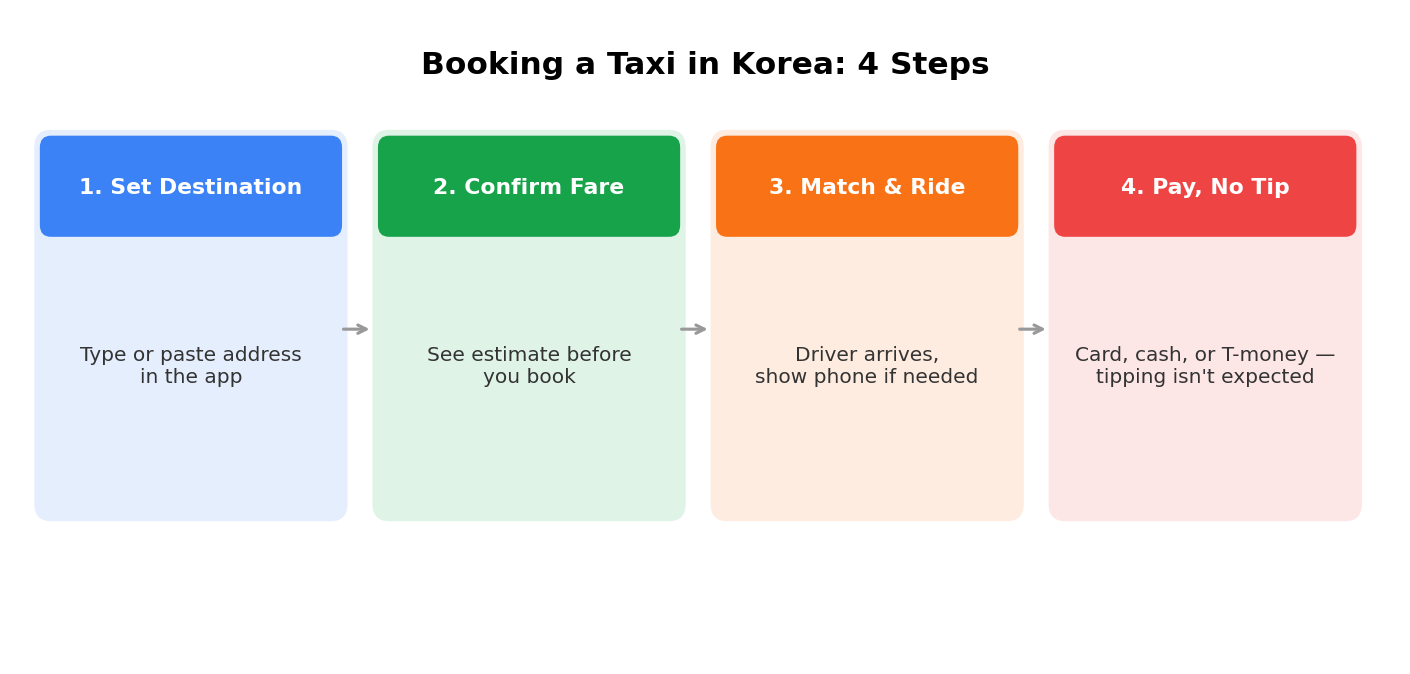
Once you've picked an app, the flow is familiar: enter or search your destination, review the fare estimate, and confirm. Typing the destination in Korean — or simply pasting an address — tends to resolve far more reliably than typing an English name, particularly for smaller restaurants or shops rather than major landmarks. For well-known sites, English names usually work fine.
When the driver arrives, showing your destination on the app screen removes any need to pronounce Korean street names, which can be genuinely difficult even with practice. The trunk is typically released from inside the car by the driver rather than opened manually, so don't be surprised if you're waiting a moment for it to pop. Cash and cards are commonly accepted in licensed taxis through a terminal built into the meter console, along with T-money in many cases, although payment options can vary by vehicle. If you're relying on an international card, carrying a backup payment method is a sensible precaution.
Fares, Surcharges, and Tipping
Standard Korean taxis run strictly on the meter, and a base fare covers the first short stretch of distance before per-distance and per-time charges apply. Late-night surcharges vary by city, taxi type, and time of day. In Seoul, higher nighttime rates apply during designated late-night hours, so it's worth checking the current local fare rules or your app's fare estimate rather than assuming a fixed schedule that applies everywhere in Korea.
Tipping is not expected or customary in Korean taxis. The fare shown on the meter — or the fare confirmed in the app — is the full amount you owe, and drivers won't expect anything extra. Rounding up slightly for convenience is fine but entirely optional.
| Situation | What to Expect |
|---|---|
| Daytime ride within the city | Standard metered fare |
| Late-night ride | Surcharge applies; exact hours and rates vary by city and taxi type |
| Group of 3–4 sharing a taxi | Splitting the fare can make it more economical than for solo travelers |
| Tipping | Not expected — pay the metered or app-quoted fare only |
For most short trips inside the city, a taxi costs more than the subway but saves real time and hassle — especially once the subway has closed for the night or you're weighed down with luggage. Knowing which app to install before you land and understanding that tipping simply isn't part of the equation covers most of what makes Korean taxis feel unfamiliar on a first visit.
FAQ
Can I use Kakao T as a foreign tourist?
Kakao T's standard signup process is built around a KakaoTalk account, which can be less straightforward for short-term visitors. Many foreign travelers instead use k.ride, Kakao Mobility's app built specifically for tourists, which supports Google/Apple sign-up and international card registration.
Can I pay for a taxi in Korea with a foreign credit card?
Often yes, either through a card terminal in the meter console or via an app that supports international cards, such as k.ride. Acceptance can vary by vehicle, so carrying a backup payment method like cash is a sensible precaution.
Do I need to tip taxi drivers in Korea?
No. Tipping isn't customary or expected — the fare shown on the meter or confirmed in the app is the full amount you owe.
Are taxis in Korea safe?
Yes, licensed metered taxis are generally considered safe and reliable. Use an official taxi rank or book through an app rather than accepting rides from unmarked vehicles soliciting outside airports or nightlife areas.
Is it hard to get a taxi late at night?
It can be more difficult during peak late-night hours in busy nightlife areas, when demand is high. Walking a short distance away from the busiest intersection before requesting a ride can sometimes reduce wait times.
Korea Tourism Organization (VISITKOREA) — Transportation Guide
Fares, surcharges, and app features change periodically — always confirm current pricing in-app before booking.
First time visiting Korea? See our Complete First-Time Korea Travel Guide.